Discovr
Hide table of contents

    What to do in the Chablais?

    Where cantons and mountains meet

    The Chablais Vaud/Valais is a transitional territory between the shores of Lake Geneva and the first great Alpine massifs. Located at the eastern end of the lake, it stretches from Villeneuve on the Vaud side to Saint-Maurice on the Valais side, up to the side valleys leading to Champéry and the Val d’Illiez. This strategic position makes it a natural crossroads between French-speaking Switzerland and the Central Alps.

    The main access routes strongly shape the region. The A9 motorway runs along the Rhône Valley and offers quick connections to Lausanne, Martigny and central Valais. The SBB stations in Aigle, Bex, Monthey and Saint-Maurice make getting around easy, while regional trains serve the surrounding villages and resorts. In Aigle, mountain railway lines take over to reach Leysin, Les Diablerets or Champéry without a car. Lake Geneva, close at hand, rounds off this varied transport network.

    With its farmland, lakeside slopes, deep gorges and mountain villages, the Chablais offers a rare diversity less than an hour from major cities. This mosaic of landscapes, combined with a mild climate on the valley floors and a more Alpine one at higher altitudes, makes it a popular region for excursions in every season.

    Galerie Défago

    The Galerie Défago is a historic trail carved into the cliff above Champéry, in the Val d’Illiez. You walk along the rock face for 600 m, protected by railings, with sweeping views down over the village and the valley.

    Vieux Moulins de la Tine

    The Vieux Moulins de la Tine in Troistorrents form an industrial heritage site recorded in the archives as early as 1401. Here you can visit working mills, a fulling mill, a press and a forge, as well as the miller’s chalet.

    Troistorrents Footbridge

    The Troistorrents footbridge is a 185 m long suspension bridge crossing the Vièze 75 m above the river, between the village of Troistorrents and the hamlet of Chenarlier. You can cross it on foot, on its own or as part of a 2 km loop in the Val d’Illiez.

    Bex Salt Mines

    The Bex Salt Mines are Switzerland’s last working salt mine, in operation since the 15th century. On a guided tour, you explore a network of galleries, shafts and chambers dug into the mountain, partly aboard the Miners’ Train.

    Natural playgrounds and outdoor activities

    In the Chablais, the terrain naturally shapes outdoor activities. The region offers a varied landscape alternating between rock faces, forests, gorges and more open plateaus. Amid these contrasting landscapes, vineyards hold a special place : in the Vaud Chablais, they form sunlit terraces around Aigle and Yvorne, perfect for a scenic walk and a tasting of local Chasselas. On the Valais side, the sunny slopes from Vouvry to Collombey invite you to discover family-run estates and vineyard trails with beautiful views of the surrounding peaks.

    The Galerie Defago, perched on the cliff above Champéry, sums up this vertical dimension. This suspended path, carved directly into the rock, offers an impressive outlook and immediately sets the tone : here, the mountains are close, accessible and invite you to get moving.

    Further down the valley, the Troistorrents Footbridge highlights the importance of mountain streams in the region’s identity. Suspended above water rushing between the rocks, it lets you feel the distinctive energy of these deep valleys. It is a favourite with families for a short outing or a first taste of the mountain environment without major technical difficulty.

    Beyond these iconic sites, sport and nature shape everyday life in the region. Scenic hikes, mountain biking on the heights, via ferratas in the valleys, swimming in rivers or simply strolling through the villages : the range of options is extensive, varied and accessible.

    Visitors will always find an activity suited to the weather or to everyone’s ability, making the Chablais a particularly versatile destination for families and nature lovers.

    Aquaparc

    Aquaparc is an indoor water park located in Le Bouveret, in the municipality of Port-Valais, on the shores of Lake Geneva. It features 12 slides, a wave pool, a lazy river and water play areas for children, with views of the Alps.

    Fort de Dailly

    Fort de Dailly is an underground fortress carved into the rock above Lavey-les-Bains, with around 20 kilometres of tunnels. A guided tour takes you past the cannons, living quarters and command posts.

    Swiss Vapeur Parc

    Swiss Vapeur Parc in Le Bouveret is a miniature railway park founded in 1989 on the shores of Lake Geneva. Here you can ride 1 :4 scale steam trains that run past replicas of Swiss landmarks.

    Les Bains de Lavey

    Les Bains de Lavey, in Lavey-les-Bains, is a thermal spa fed by Switzerland’s hottest water, tapped at 62°C. Here you can bathe in indoor and outdoor pools, with saunas, hammams and treatments, facing the Dents du Midi.

    Heritage, local stories and craftsmanship

    The Chablais is about more than its landscapes. It is also home to a rich heritage, often understated, that tells a fascinating story linked to the natural border formed by the Rhône Valley.

    In Morcles, above Lavey, Fort de Dailly is one of its symbols. Dug into the mountain, it bears witness to the strategic position of the narrow pass controlling access to Valais. Although part of the complex remains military, the site recalls the decades when this narrow gorge was considered a key stronghold of Swiss territory.

    Further north, the Bex Salt Mines recall another essential chapter of the local economic history. Worked for several centuries, they are one of the oldest industrial sites in Switzerland still open to the public. Exploring their tunnels, you discover not only extraction techniques but also the working conditions of the past, which left a lasting mark on the region’s identity. Salt, long a precious commodity, shaped the economic life of these valleys.

    In a more relaxing vein, the Lavey thermal baths are today a popular place to unwind. Their thermal waters, among the hottest in the country, rise from deep beneath the valley and illustrate the intense geological activity under the Alps. It is a place where you can physically feel the quiet power of the mountains.

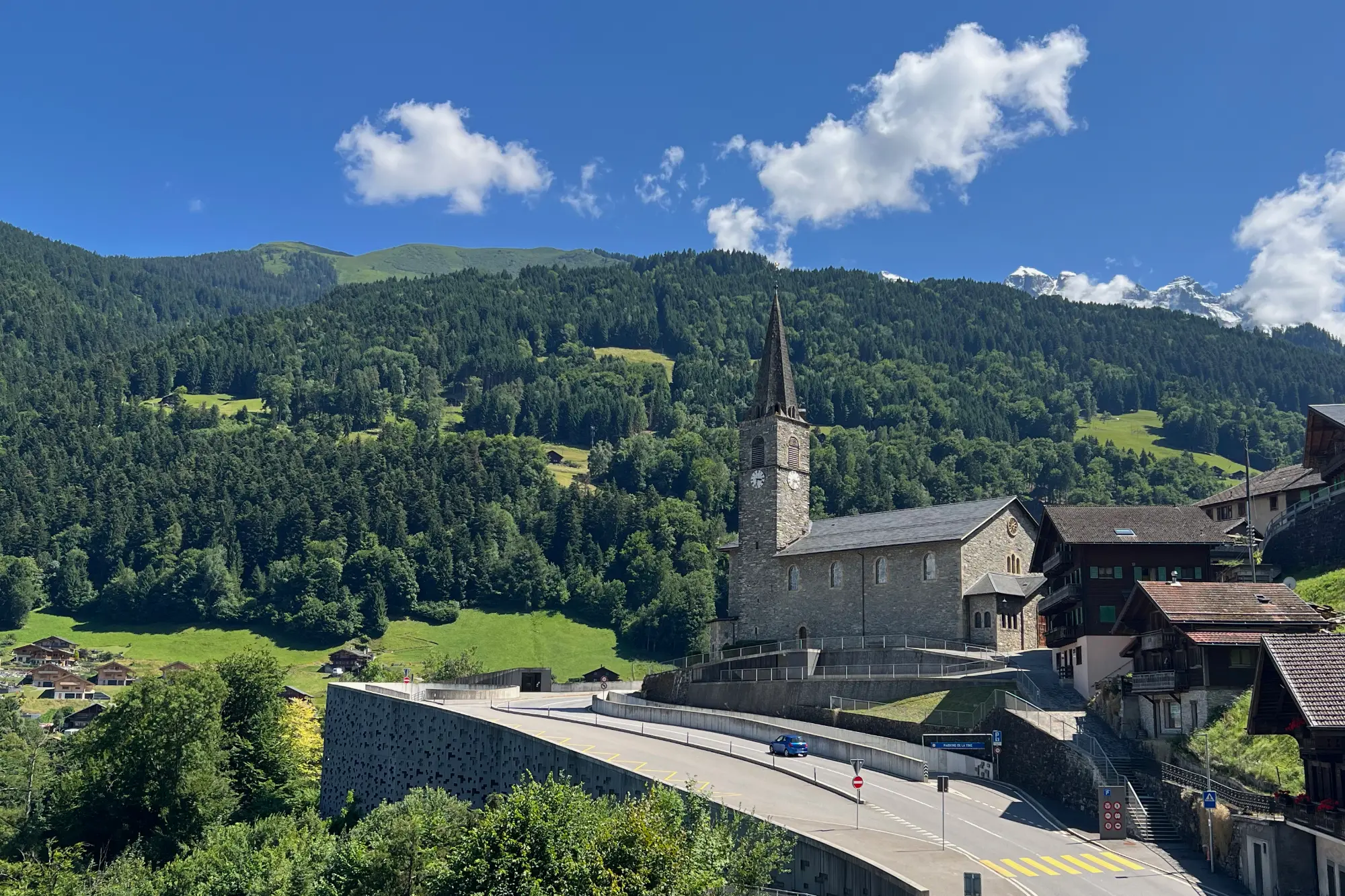
    Finally, the area stands out for its old villages, often built around a church or a historic bridge, and for the importance of local traditions linked to alpine pastures, winegrowing and crafts. Travelling through the Chablais means going from a fort to a thermal bath, from a mine tunnel to a village square, each time with a chapter of Alpine history expressed in the landscapes, customs and craftsmanship.

    Did you know ?

    The tunnels of the Bex Salt Mines stretch for more than 50 kilometres. Only part of them is open to the public, but together they form a true underground labyrinth worked since the 16th century.

    Meals, intimate concerts and themed events are occasionally held there, creating a unique atmosphere among hand-dug chambers and passages carved into the rock.

    Practical tips

    • Duration : one day is enough for an overview, but two to three days let you combine nature, relaxation and heritage.
    • Itineraries : combine the Rhône Valley with the side valleys, for example Aigle, Bex, Saint-Maurice, or a Champéry, Troistorrents, Monthey route.
    • Dining : many village inns and regional restaurants, often serving Valais dishes or Vaud specialities.
    • Accommodation : hotels in the main towns, B&Bs in the villages, thermal spa options in Lavey.
    • Children : several family-friendly activities, including Swiss Vapeur Parc, Aquaparc and many easy walks on the valley floor.
    • Skiing : the Franco-Swiss Portes du Soleil ski area (Champéry, Morgins, Champoussin, Les Crosets) is one of the largest in Europe, ideal for combining a stay in the valley with days on the snow.
    • Access : dense SBB network, mountain lines from Aigle, quick access via the A9.
    • Best time to visit : spring and autumn for hiking, summer for outdoor activities, winter for the snow-covered valleys.