
In Geneva’s Old Town, the International Museum of the Reformation traces the history of the Protestant Reformation, from Luther and Calvin to the present day. Explore five centuries of Protestantism through more than 650 objects, in an 18th-century house.
History museums
Main highlights
- A thematic tour of the history of the Reformation and Protestantism, from the 16th century to the present day
- Over 650 objects : manuscripts, paintings, engravings, books, music and films
- The Maison Mallet, a 1723 mansion built on the former cloister of Saint-Pierre
Overview
Founded in 2005, the International Museum of the Reformation (MIR) is a secular institution dedicated to the history of the Reformation and Protestantism. It tells the story of the movement born from Martin Luther’s protest in 1517 and taken up by John Calvin in Geneva in 1536.
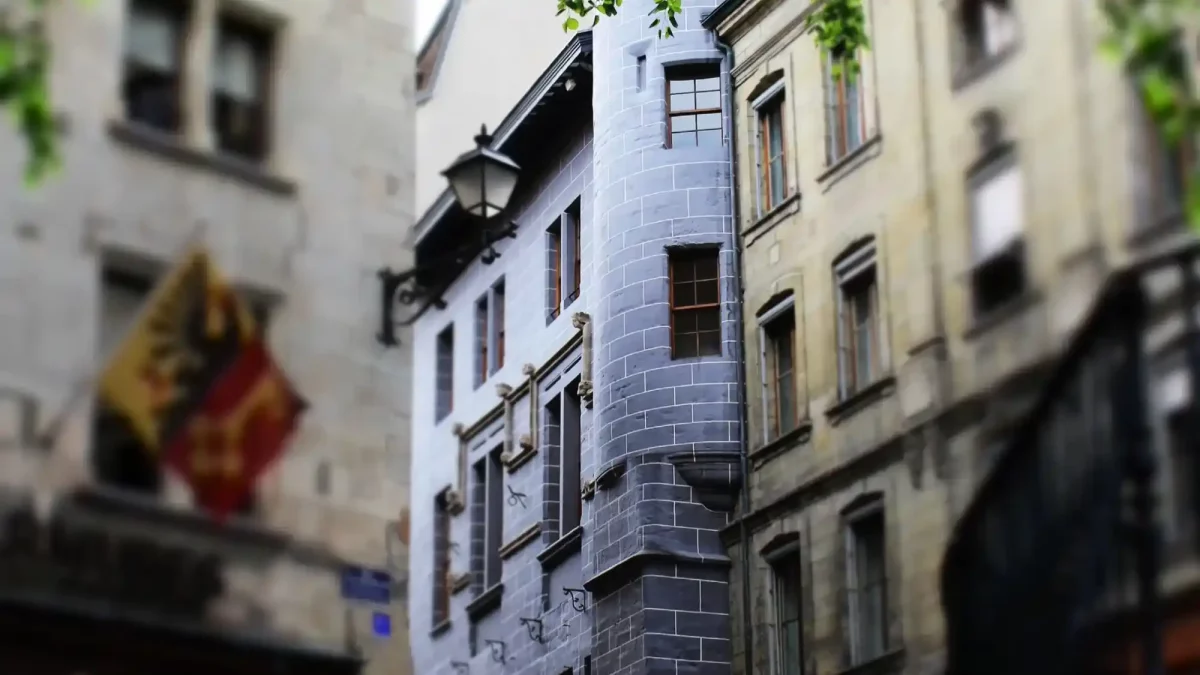
The museum is housed in the Maison Mallet, a mansion built in 1723 by the French banker Gédéon Mallet. It stands on the former cloister of Saint-Pierre, on the very spot where the people of Geneva adopted the Reformation in 1536. The exhibition design is by StudioTovar.
"*" indicates required fields
What to see and do
The permanent exhibition spans nine rooms on the ground floor and basement of the Maison Mallet. The thematic tour takes you from the 16th century to today and shows the movement’s influence in Geneva, Switzerland and beyond.
Paintings, manuscripts, books, engravings, objects, music and films bring together a wide range of figures : Calvin and Martin Luther King, Marie Dentière and Aretha Franklin. Highlights include Luther’s 95 Theses and handwritten letters by Dietrich Bonhoeffer.
Five further rooms host temporary exhibitions exploring a particular aspect of Reformation history or a figure of the movement. The museum also offers tours tailored to your interests : religious history, art or society.
Practical information
Getting there : the museum is in the Old Town, next to Saint-Pierre Cathedral. Public transport stop : Cathédrale.
Visit duration : allow 1.5 to 2 hours for the whole museum.
Audience : visitors interested in history, art or society.
On site : a specialist bookshop offers titles on the Reformation and Protestantism.
Visiting tips
Weekday mornings are generally quieter. At weekends the museum can be busier, especially during a temporary exhibition.
The museum stands on the very site where the Reformation was adopted : combine your visit with the neighbouring cathedral to better understand Geneva’s religious history.
Nearby
- The Maison Tavel, Geneva’s oldest private house, is home to the Museum of Urban History and Everyday Life.
- The Archaeological Site of Saint-Pierre Cathedral in Geneva reveals remains of churches dating back to the late 4th century.
- The Reformation Wall, in the Parc des Bastions, pays tribute to the great figures of the Protestant Reformation.

 Report an error or complete the informations
Reviews about this place